In exercise of the powers under Section 42 of the National Construction Authority Act (the NCA Act), the Cabinet Secretary responsible for public works, in consultation with the Board of the National Construction Authority (NCA), developed the National Building Code, 2024 (the Code) which was published on 1st March 2025 and launched on 17th July 2024 by the NCA. The Code came to effect on 1st March 2025, marking a significant update to the construction standards in the country, replacing the outdated Local Government (Adoptive By-Laws) (Building) Order 1968. The Code’s core objective is to prescribe improved standards in building design and construction and maintenance that reflect the best practices that promote quality, safety, health and acceptable environmental norms in the building and construction sector. The Code also creates a regulatory platform that facilitates collaboration and compliance by all stakeholders in the construction industry.
The Code introduces several new provisions and updates to existing regulations to ensure safety, sustainability, and compliance with modern construction standards. The Code provides for standards for:
- design, construction, operation, inspection, and maintenance of buildings;
- building materials, products, elements, systems, and services; and
- infrastructure services, disaster management, and safety of building
Below are the key provisions introduced by the Code
1. Compliance with Applicable Laws
Developers must obtain a development permission under the Physical and Land Use Planning Act, 2019, an Environment Impact Assessment (EIA) License from the National Environment Management Authority (NEMA) under the Environmental Management and Coordination Act (EMCA) and a compliance certificate from the NCA in accordance with the National Construction Authority Act (the NCA Act) prior to undertaking any construction works.
According to the Code, only registered professionals can design and supervise construction works. Registered professionals include physical planners, architects, engineers, land surveyors, building surveyors, quantity surveyors, accredited site supervisors and accredited skilled workers duly registered under
2. Parking Spaces
Commercial building owners must provide parking spaces per one hundred (100 m₂) square meters of gross built area depending on the type of building.
Additionally, at least 5% of parking spaces provided in commercial buildings and multi dwelling units must include electric vehicle charging infrastructure.
3. Preparation of Construction Sites
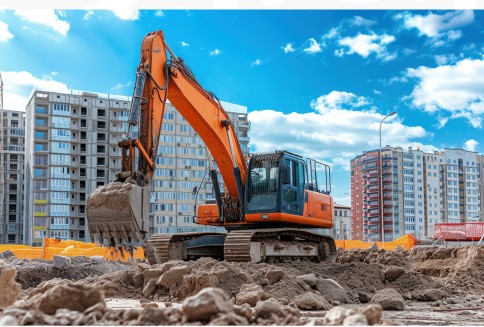
An owner of a building must install boundaries in a construction site to prevent public access to the construction site and protect the site before starting any building activities. The Code also requires contractors to address unstable soil or slopes with engineering solutions that ensure proper site preparation before commencement of building works. Measures must also be taken to control dust and noise in construction sites, especially during the times prescribed in the Code.
4. Building Materials
The Code prohibits the use of non-building materials in construction and provides that all building materials must meet the relevant Kenya Standards (KS) as declared by KEBS and be suitable for their intended use. Used materials can only be used if they meet their performance requirements as declared by KEBS as per the Standards Act Cap 496.
5. Structural Design
Buildings must be designed in accordance with recognised engineering standards, using reliable design methods and materials, to enable them to withstand and resist expected and probable loads, environmental conditions such as wind, seismic, and thermal effects, and other stressors such as uneven settlement or lateral forces. Structural materials must comply with Kenya Standards, and alternative materials must undergo testing. Structural designs must be prepared and certified by structural engineers registered and licensed as per the Engineers Act, 2011.
6. Spaces within Buildings
Residential buildings must maintain a minimum width of at least 1.5 metres from its boundary to the nearest adjacent construction site. This shall extend to the entire length of the building width of 1.5 metres. Habitable rooms within a building must also have a minimum height of 2.4 metres.
7. Lighting and Ventilation
Rooms must have either at least one opening for natural light that is at least 10% of the floor area (or 0.2m2 whichever is higher) or artificial lighting and ventilation. Any artificial ventilation systems installed in buildings must be designed by engineers registered and licensed as per the Engineers Act, 2011. The engineer is required to confirm that the ventilation system has been installed in accordance with the approved design and furnish the relevant approving authority with a certificate to that effect. The owner is also required to conduct an annual test on the ventilation system and submit test reports to the relevant approving authority.
8.Fire Safety and Fire Installations
The Code prescribes different requirements to address fire safety concerns including requirements for fire-resistant walls, floors, and ceilings, with specific requirements for different occupancies, firefighting lifts for multi-storey buildings exceeding six storeys, hydrants, sprinkler systems, and portable extinguishers. Emergency routes must also be clearly marked and provide safe exit in case of fire.
9. Disaster Risk Management
Contractor must ensure the safety of workers and the public during construction, including the prevention of falls, fires, and other hazards. Contractors are also required to provide a sufficient number of suitable emergency routes and exits to enable any person to reach a place of safety quickly.
10. Accessibility for People with Disabilities
Commercial buildings must provide ramps, lifts, and other facilities to ensure accessibility for people living with disabilities. Doors and corridors must also be wide enough to accommodate wheelchairs.
11. Energy Efficiency and Sustainability
Developers are encouraged to use renewable energy sources like solar panels that meet the Kenya Standard specifications as provided in paragraph 328(2) of the Code. Buildings must be designed to minimize heat gain and maximize natural cooling and ventilation whilst ensuring good indoor air quality through proper ventilation and the use of low-emission materials.
Conclusion
The Code introduces comprehensive updates to ensure that construction practices in Kenya are safe, sustainable, and compliant with modern standards. It also emphasises the use of quality materials, professional oversight, and the integration of renewable energy and accessibility features. These provisions aim to enhance the safety, durability and environmental sustainability of buildings across the country.
If you have any queries relating to the above, please do not hesitate to contact Bernard Musyoka or Joy Ngano. Please note that this publication is meant for general information only and should not be relied upon without seeking specific subject matter legal advice.